SEO vs GEO: Is Traditional Search Engine Optimization Dead?
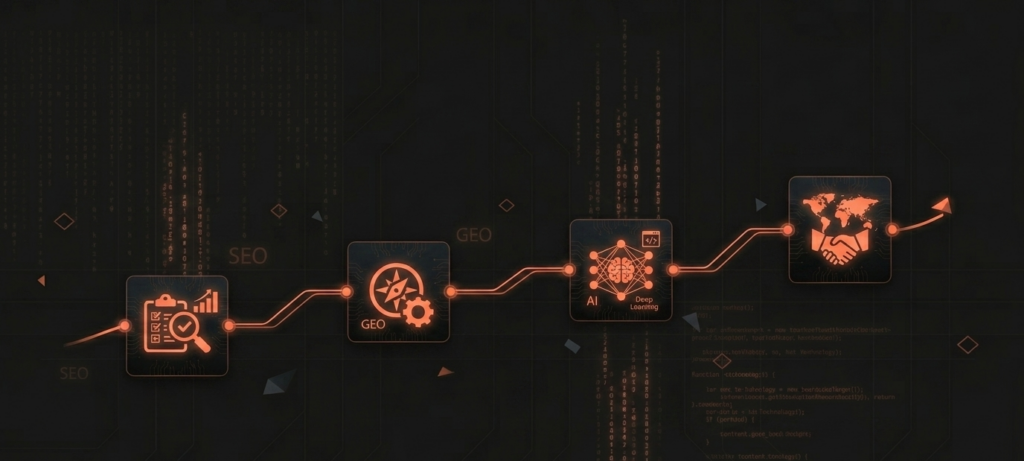
For over two decades, digital marketing followed a predictable playbook. If you wanted your business to be found, you optimized your website for Google. You researched keywords, placed them carefully in headings, built backlinks, and hoped to rank in the coveted top three blue links on the search results page. Today, that playbook is fracturing. With the rise of AI-powered search tools, conversational bots, and answer engines like ChatGPT, Gemini, and Perplexity, the way people find information has fundamentally shifted. Users are no longer just looking for a list of websites to click on; they are looking for direct, synthesized answers. This shift has given birth to a new discipline: Generative Engine Optimization (GEO). But what does this mean for traditional SEO? Is it time to abandon old strategies, or do they still hold value? Understanding the shift from search to answers To understand why GEO matters, we have to look at how these new AI models operate. Traditional search engines crawl the web, index pages, and use algorithms to match keywords to a user’s query. The goal is to direct traffic to the most relevant website. Generative engines do something entirely different. They read, understand, and synthesize vast amounts of web content to generate a unique, conversational response to the user. Instead of clicking through three different blogs to compare occupational health providers in Helsinki, a user can simply ask an AI bot to do the comparison for them. In this new environment, visibility is no longer measured by page rankings or impressions. Instead, success means being cited as a trusted source inside the AI’s generated answer. If your business is not part of the bot’s data set or training context, you effectively cease to exist for that user. Why traditional SEO is far from dead With all the buzz around AI, it is easy to assume that traditional SEO is dead. However, that conclusion misses a critical technical reality: generative engines rely heavily on traditional SEO foundations to gather their data. AI bots do not invent information out of thin air; they crawl the web just like Google does. They look for high-quality, structured, and technically sound websites to use as their primary sources. This means that the core pillars of traditional SEO — clean site architecture, fast loading speeds, structured schema data, and high-quality content — are now more important than ever. Think of traditional SEO as the ticket that gets you into the arena. Without proper indexing and technical optimization, AI bots will never find your content in the first place. Old-school SEO is not dead; it has simply evolved into the baseline requirement for modern digital visibility. How to optimize your content for GEO If traditional SEO is the foundation, GEO is the strategy you build on top of it to win the attention of AI bots. Optimizing for generative engines requires shifting focus away from simple keyword stuffing and moving toward deep authority and contextual clarity. AI engines prioritize content that demonstrates true expertise, direct experience, and absolute trustworthiness. Instead of writing generic articles that repeat the same high-volume keywords, businesses need to produce insightful, data-driven content that answers complex, multi-layered questions. Using clear entity optimization — explicitly naming your location, your unique services, and your industry certifications — helps AI models connect the dots and understand exactly what your business represents. Furthermore, integrating user intent and conversational language directly into your copy makes it significantly easier for bots to match your expertise with real-time user prompts. The strategic intersection of marketing and technical security There is another hidden element to digital visibility in 2026 that many marketing agencies overlook: technical trust and security. As AI bots become more sophisticated, they place a massive premium on the security and reputation of the websites they source information from. A website with poor security protocols, outdated software, or data compliance issues risks being flagged or ignored by major AI crawlers. At Marketing by Clark, we believe that modern marketing cannot exist without a secure foundation. We don’t just build beautiful, search-optimized websites and run multi-channel campaigns; we ensure your entire digital presence is secure, compliant, and resilient from day one. Through our close partnership with BQ Resilience, we bring senior CISO-level security expertise into our digital marketing and web development projects. This unique combination ensures that your brand is not only highly visible to both human users and AI bots, but also fully protected against digital risks. Whether you need to dominate traditional Google search, secure a spot in AI-driven answers, or audit your website’s technical compliance, we roll up our sleeves to make it happen. Find out more about our marketing services. Want to know more about our cyber security services?
The Importance of Security Audits for Healthcare Compliance

Healthcare organizations manage some of the most sensitive information any organization can hold. Patient records, treatment notes, prescriptions, imaging data, staff credentials, and billing details all sit inside systems that must stay private, accurate, and available at the same time. That is why a security audit matters so much in healthcare. For hospital groups, specialist clinics, private practices, and occupational health providers alike, a security audit is far more than a technical review. It is a structured way to test whether your real controls match legal obligations, operational risks, and the realities of day-to-day care delivery. Why healthcare security audits protect compliance, care continuity, and trust The healthcare sector faces a uniquely demanding risk profile. Confidentiality breaches can expose deeply personal details, integrity failures can directly affect patient treatment history, and availability failures can paralyze day-to-day care delivery when time matters most. A comprehensive security audit gives leadership an evidence-based view of what is working and what needs immediate attention. Instead of relying on dangerous assumptions, your organization can verify access rights, system configurations, logging, backup readiness, and vendor access against actual risks. This is just as critical for small and mid-sized providers as it is for large hospital networks. Smaller clinics often assume they are flying under the radar, yet cyberattacks frequently target organizations with limited internal security capacity or informal processes. A proactive audit helps close these digital blind spots before they become a serious incident. Ultimately, patients expect their data to be handled with care, and a strong audit program proves you take that responsibility seriously. What a healthcare security audit reviews across your systems A robust security audit goes beyond basic firewalls. It evaluates your entire operating environment — connecting technical safeguards directly to digital customer journeys, service continuity, and regulatory duties. Key focus areas typically include: Finnish healthcare compliance requirements shape the audit scope In Finland, healthcare security sits within a strict legal framework. While GDPR sets the European baseline for processing sensitive health data, the Finnish Client Data Act brings medical-specific duties into sharp focus. Furthermore, any provider connecting to Kanta services must maintain an active information security plan and continuous self-monitoring. Security cannot be a one-time project; controls must adapt as systems and regulations evolve. Finnish healthcare rules strictly expect patient data access to be tied directly to specific clinical tasks. Audits are the only way to verify that this principle is actually followed in practice. As the historical Vastaamo case reminded the entire sector, security failures in healthcare are not abstract compliance checklists — they have devastating real-world consequences for patients, legal standing, and brand trust. How to turn security audit findings into corrective action The strongest time to schedule an audit is before a major system rollout, launch, or a regulator asks difficult questions. If your organization is undergoing rapid growth, onboarding to Kanta, expanding remote work, or utilizing third-party software vendors, a baseline review is highly recommended. A valuable audit does not simply leave you with a stressful list of flaws. It provides a prioritized roadmap from findings to action, mapping risks by business impact, identifying quick wins, and helping your team balance patient care with regulatory pressure. Practical security audit support for your business Medical providers need partners who can look at their unique environment, speak plainly with management, and translate complex technical findings into clear business steps. At Marketing by Clark, we provide practical, hands-on support across marketing, technology, and operational improvement. To ensure senior-level expertise, our healthcare security audits and vCISO services are delivered in close partnership with BQ Resilience. Whether you are a private clinic needing a focused review of user rights and backup readiness, or a larger health provider requiring comprehensive compliance mapping for Kanta, we help you turn digital uncertainty into a secure, competitive advantage. Read more about our cyber security services here.